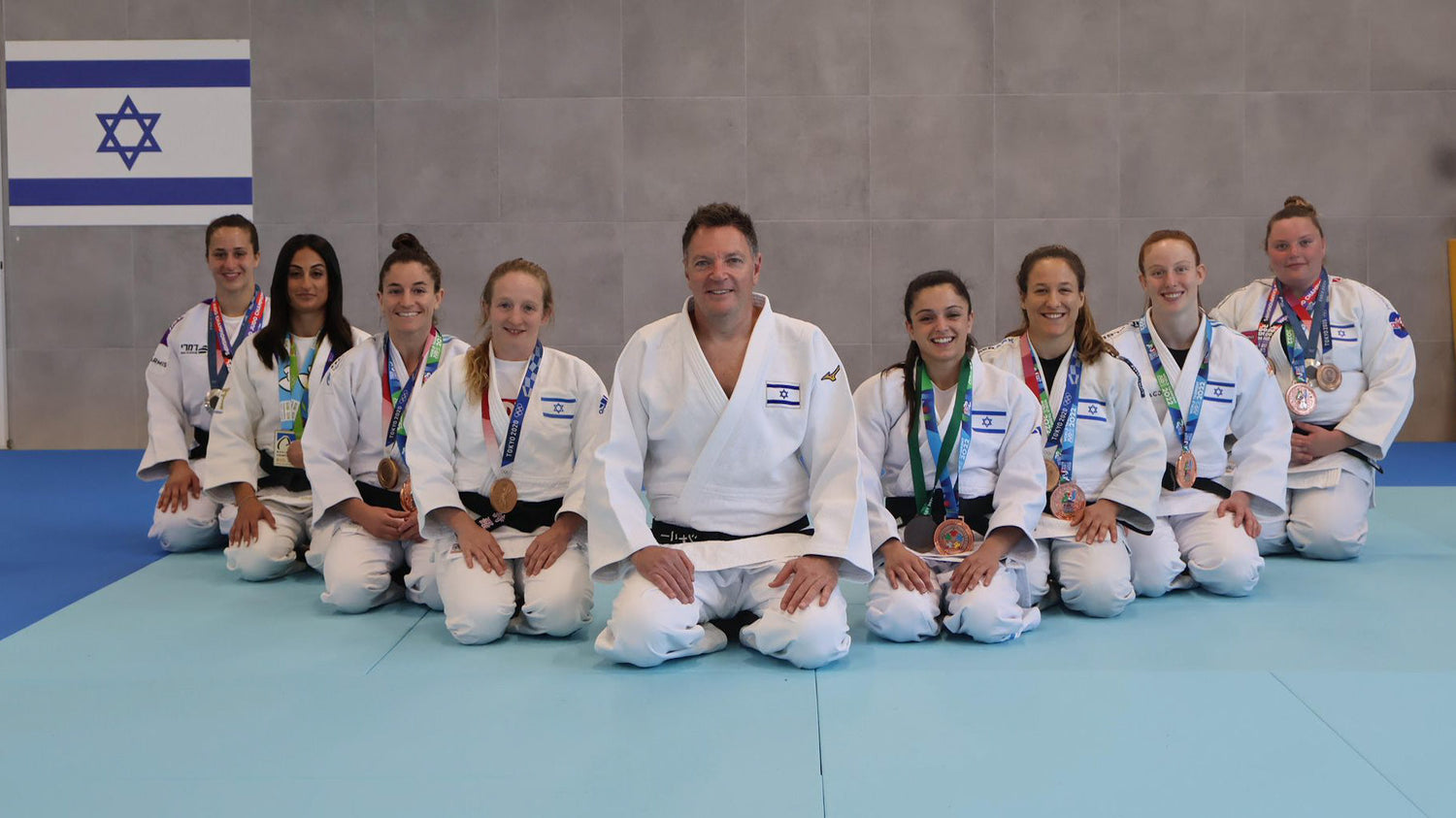
Shany Hershko is Israel’s winningest coach. In the past, he has produced many top female champions but now he has a bigger task ahead as the head coach of both the men and women’s national team. We speak to him about how he’s handling this challenge and his goals for the team ahead of the 2028 Olympics.
Q: You used to be the head coach for the women’s team but now you are the head coach for both the men’s and women’s team. How did this situation come about?
A: A few months ago, Oren Smadja, the head coach of the men’s national team, decided to step down for personal reasons. As a result, the Israeli Judo Federation asked me to take responsibility for the men’s team as well. After 15 years as head coach of the women’s national team, I am now head coach of both the men’s and women’s teams. We have created a unified structure—one national team—training together in age‑based groups. I am responsible for the entire performance pyramid in Israel: from the Academy for Excellence, through the cadet and junior teams, and up to the senior and Olympic teams. All of them train under one roof at the National Sport Center at the Wingate Institute, with a single support system and one coaching staff, where each coach has defined responsibilities for their athletes and teams.
Q: Previously, did the men and women train separately? What about now?
A: Yes. Although the men’s and women’s teams often traveled to the same competitions, they operated as two separate systems. The women’s team trained under my responsibility with its own program, coaching staff, and support structure, while the men’s team did the same independently. Today, one of my biggest challenges is merging these two systems and managing them under a unified philosophy—leveraging the strengths each team brings in order to elevate the performance potential of all athletes.
Q: The obvious benefits for women to train with men are that women get to fight much stronger opponents. But what would you say are the benefits for men to train with women?
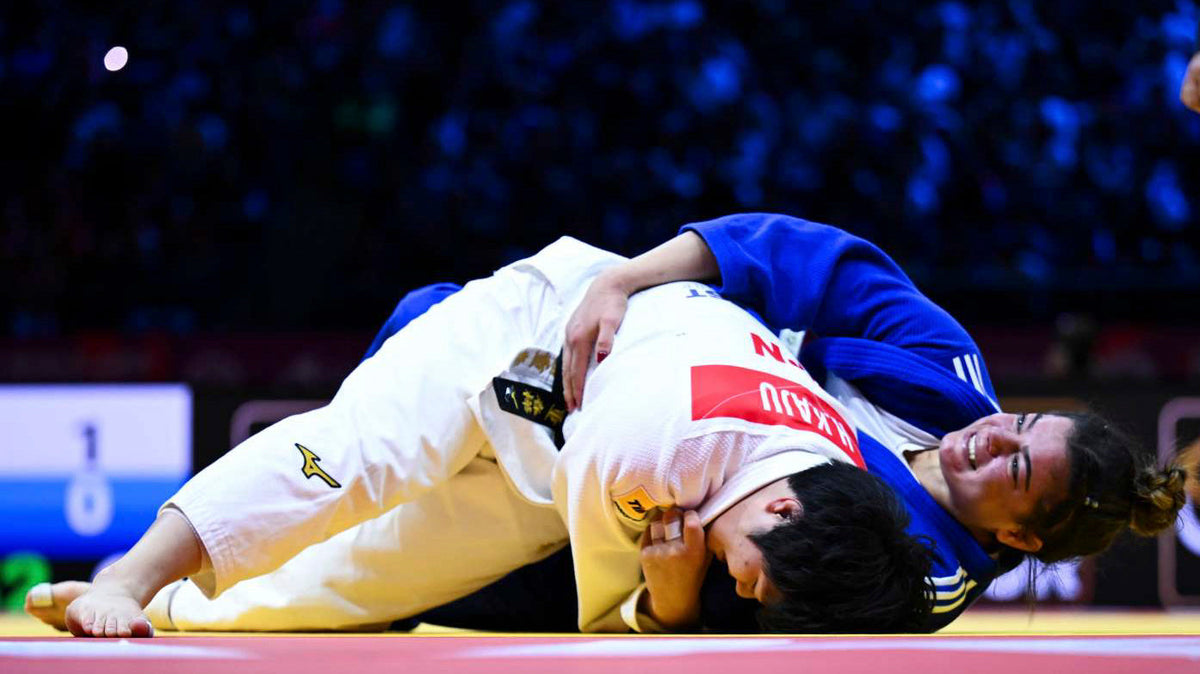
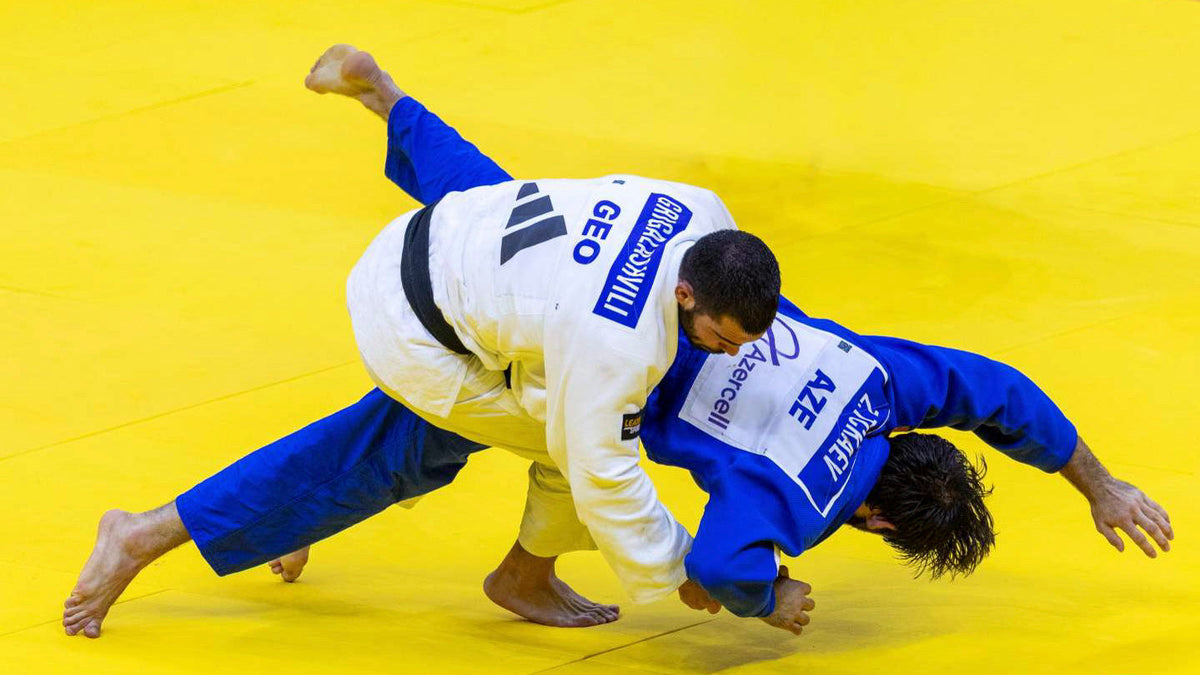
A: There is no doubt that it is highly beneficial for the women to train with men, as men can provide stronger training partners and higher levels of resistance and reaction. Even in the past, when I coached only the women’s team, we regularly brought male training partners for randori and certain technical sessions. Today, with the teams training together, this has become much easier and more effective. At the same time, I believe the men also benefit from training with the women—especially now, when many male athletes are relatively new and have not yet achieved significant results, while the women’s team includes several highly accomplished athletes, from Olympic medalists to world and European medalists. If we manage this integration correctly, combining the strengths of both teams, it will significantly enhance the development and potential of all athletes.
Q: What would you say are the biggest challenges you face as the head coach?
A: There are always challenges in high‑performance sport—every Olympic cycle, every season, every major competition brings new and unexpected obstacles, both good and bad.
The current challenge is to bring the men’s and women’s teams together and elevate the level of both, despite the professional gaps that currently exist. Our immediate goal is to enter the Olympic qualification period in June with a group of athletes capable of competing for Olympic spots, while also achieving results in major international events. This is a significant challenge, especially with limited time, but I have a large and highly qualified staff around me, and the athletes are extremely motivated. My task is to connect all these positive elements so that we arrive at the start of qualification fully prepared, continue improving afterward, and ensure that this unified system of men and women proves itself as quickly as possible—while understanding that patience is required and progress must be made every day.
Q: Israel has a centralized system at Wingate Institute. How crucial do you think this has been for Israel's success in judo?
A: One of my first strategic decisions when I began coaching around 15 years ago was to centralize our top athletes at the Wingate Institute, bringing together the best judo players under the strongest possible support system—coaches, medical and physiotherapy staff, nutrition, psychology, and everything an elite athlete needs. As a small country, one of our greatest advantages is that we can centralize all top athletes in one place. This allows them to train together, push each other, and maximize their potential, while making the best use of our limited national resources. Because of this centralized model—and the quality of our athletes and staff—the results speak for themselves. For small nations seeking to compete with global powerhouses, centralization is not just helpful—it is essential.
Q: You have famously said that smaller judo countries have to find their own way to train and they cannot simply follow the Japanese. Can you elaborate on that?
A: Yes. This philosophy is fundamental to my approach. I believe that small countries must find their own unique path and cannot simply copy the methods of the major judo nations. This idea is also deeply rooted in many aspects of Israeli society, where we often must innovate in order to survive and succeed. When you choose to do things differently from your rivals, there is always risk—but high risk can lead to high reward. We must constantly look for new methods, learn from the best, study our competitors, but also be willing to innovate and do things in our own way. That is how you break statistical patterns and achieve breakthroughs. Over the years, we have succeeded many times through this approach—alongside mistakes and difficult moments, which are also part of growth.
Q: What is a typical training day like for Israeli judokas?
A: The daily life of our senior athletes—and of the entire staff—revolves around judo and the pursuit of excellence. This understanding shapes the entire training system and the structure of the athletes’ daily routine. On average, the athletes train twice a day at the National Sport Center. In addition, many aspects of their lives—medical care, physiotherapy, nutrition, academic studies, and in some cases even housing—are integrated into the training center. This minimizes wasted time on travel, maximizes efficiency, and ensures they have immediate access to the best possible support team and facilities to help them succeed.
Q: You have hired foreign coaches to assist you. What is the main reason for this?
A: As head coach, my role is to provide the best conditions possible for the athletes, and that begins with the quality of the coaching staff. Hiring foreign coaches is based on several considerations. Firstly, they bring different perspectives, experience, and training methods from other countries. Secondly, they contribute diverse skills and professional approaches, expanding the range of tools available to our athletes. Thirdly, they add cultural and social balance to the staff. A foreign coach who comes to work in Israel is fully committed to the national team, and this combination of Israeli and international expertise creates a richer, more dynamic environment for both athletes and staff. I strongly believe in integrating ideas from different countries rather than relying on a single worldview.
Q: The Isreali team goes for training camps around the world, and also overseas training in countries like Japan. How crucial is this?
A: Like every top judo nation, we rely heavily on international training camps. One of the great advantages in judo is that you can train with the same opponents you will later face in major competitions. A single intensive one‑week camp can provide the equivalent of several competitions in terms of randori volume and exposure to different styles. However, training camps are also a tactical tool. Athletes from all countries come with the same goal: to gain an advantage. The key is knowing how to extract more value than your rivals. We use short, intensive camps as preparation for major competitions, and longer camps—such as those in Japan—for high‑volume randori and deeper learning. Japan is an excellent platform for development, offering a different style of judo and the opportunity to accumulate a large number of training fights while staying for extended periods. In addition to Japan, we participate in many international camps across Europe and other regions, depending on the season and strategic needs.
Q: What are your targets for LA 2028?
A: Our goal for the Los Angeles 2028 Olympic Games is clear: to succeed at the highest level. Additionally, we aim to build a strong, sustainable team for the 2030–2032 Olympic cycle.
The challenge is enormous because we set a very high bar in Paris. The Paris Games were the most successful Olympics in Israeli judo history. The women’s team reached two Olympic finals—something no other nation achieved in the women’s individual events—and won two medals. Peter Paltchik’s medal brought us to a historic total of three Olympic medals in one Games. The aspiration is always to achieve something we have not yet accomplished. I will be satisfied if we return from Los Angeles with at least one Olympic medal—ideally two—and perhaps even achieve historic milestones such as Israel’s first Olympic gold in judo or a third Olympic medal for one athlete. We wake up every morning striving to improve and to leave a meaningful legacy. The Olympics are where that legacy is truly written, and our mission is to bring a strong, competitive team to both the individual and team events and to fight for results that will make history.